
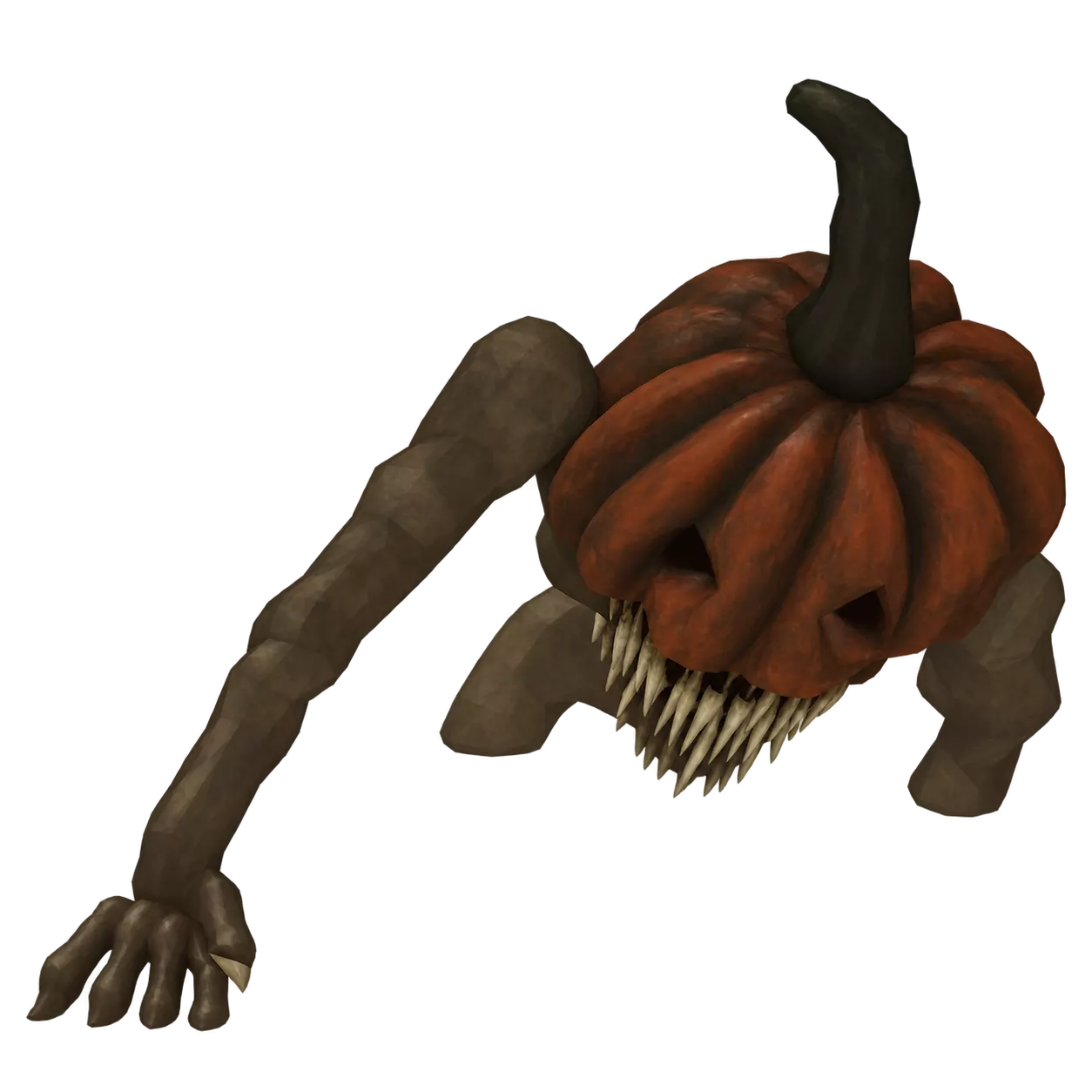
The signature threat is a pumpkin-headed, long-armed hunter that moves through green water. It does not “see” you on dry yellow tiles—it localizes splashes and loud Maintenance Lock machinery, then commits toward that noise.
Easy parties commonly report one hunter; Normal reports three. Each extra entity adds overlapping sound pressure, so bait timing matters more than raw jump skill.
This page covers detection, movement, telltales, and responses. Pair it with the distract guide for throw technique and with water/sound for valve segments.
- Detection
- Sound-first Splashes + Maintenance Lock
- Not a threat
- Dry idle Still can reach platform edges
- Best counter
- Distant bait Then cross while watching return
- Stun tool
- Flare (~5s) 8s cooldown on same target
Monsters in DONT SPLASH
Public footage and independent wikis describe a single hunter archetype for Poolrooms routes. Treat any unverified “new enemy” claims as patch-specific until you record it in your lobby.
Horror tension comes from audio direction—you often know the hunter is coming before you see water ripples. Use that delay to finish a jump or cancel a risky valve hold.
Standing on a platform does not grant immunity. The hunter can park at your edge while you wait for a rotating bridge alignment.
Confirmed Monster Behaviors
Movement you should expect
- Commits toward the last meaningful splash, not toward your model on dry tile.
- Paths through water even when you are elevated—edge control matters more than height.
- Can redirect mid-approach if a louder splash happens closer to its position.
Difficulty scaling (party settings)
Easy is the training ground: wider platforms and halved coin rewards, but the same splash rules. Normal adds hunter count and tighter spacing. Hard unlocks after reported Normal clears—verify the padlock text locally.
Sound sources that pull the hunter
Not all noise is equal, but all listed sources have pulled hunters in public guides. Plan baits before you create accidental splashes..
- Player landing in water — Dry-route jumps; recover with distant bait if you clip.
- Pebble / bottle splash — Throw away from your next jump; keep eyes on hunter path.
- Maintenance Lock (hold E) — Time valve holds when bait is active or teammate distracts.
- Rising water after 2/2 valves — Locate glowing exit and yellow blocks before flood peaks.
- Teammate splash downstream — Call baits in multiplayer; do not double-splash same lane.
| Category | Confirmed behavior |
|---|---|
| Vision on dry tiles | Does not hunt by sight—you are not “spotted” for standing still on yellow platforms. |
| Hearing | Responds to water splashes and loud Maintenance Lock machinery. |
| Movement | Swims through water and closes on platform edges. |
| After a pebble throw | May still approach your tile—watch direction, do not auto-cross. |
Difficulty lobbies may spawn more hunters on Normal; confirm counts in your party settings.
Warning Signs and Environmental Cues
Visual and audio tells
- Ripples or splash VFX moving toward your lane after a throw.
- Sudden water movement without your input—check teammate splashes.
- Valve audio looping while you are still on approach tiles.
False safety moments
- Immediately after your pebble lands—hunter may still approach you.
- While crouching or not moving on dry tile near the edge.
- After first valve opens—second valve and rising water add new noise.
How to Avoid Dangerous Encounters
Default pattern: bait away → confirm hunter commit → cross dry segment → re-bait before the next long gap. Speed only helps after sound is controlled.
Solo bait-and-cross checklist
- Pick a throw point that is not on your exit vector.
- Wait for hunter motion toward the splash before leaving your tile.
- Keep a second pebble for mid-lane corrections—do not spend your last bait early.
- If rising water starts, shorten bait loops and move toward block stairs.
Multiplayer roles
- Designate a bait player before Maintenance Lock segments.
- Crosser waits for a clear call—double splashes on one lane waste baits.
- Downed players floating create ongoing risk—see friends guide for revive prompts.
Flares, bottles, and emergency windows
Flares stun on hit for about five seconds with an eight-second refractory period on the same target—use them to salvage a mis-thrown bait, not as your only plan. Day-to-day throws still follow the pebble baiting routine.
Bottles create one loud splash per throw, which helps on distant pulls when pebble skips are unavailable. Squads sync throws using co-op routing; compare bottle slots and refills in the upgrade shop.
Frequently Asked Questions
Are there multiple monster types?
Poolrooms guides center on the water-sensitive hunter. Note new silhouettes only after you capture them in your build.
Can I stop watching after a pebble lands?
No—approach your platform edge remains possible. Pick the next tile based on live position.
Does crouching or walking slowly help?
Dry movement does not substitute for splash control. Loud objectives still alert the hunter.
Will more Robux gear delete the hunter?
Passes upgrade tools and economy—they do not remove hearing mechanics from stages.